High Blood Pressure Doesn’t Check Your Dress Size or How Much You Can Bench Press Before It Moves In
Let me tell you about a lie we’ve all been sold.
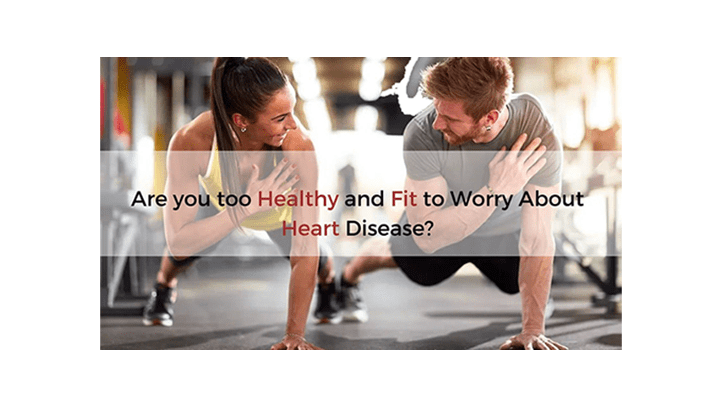
For decades, the world has told us that heart disease belongs to other people. The ones who don’t move enough. The ones who eat the wrong things. The ones whose bodies “show it.” And so millions of slim, active, salad-adjacent people have been walking around with a false sense of security, convinced that because they fit into the jeans they wore in college, their arteries must be throwing a party in there.
I hate to be the one to break it to you — actually, no, I don’t. This is exactly why I’m here.
Your arteries cannot be assessed by looking in the mirror.
Read that again. Your mirror is not a medical device. It has never once measured your blood pressure, your cholesterol, or your blood sugar. It can’t even tell you if you have spinach in your teeth half the time.
The Funeral We Have All Attended
Every one of us on this island knows this story. The names change. The story never does.
They were in the gym before sunrise. Ran every year. Lifted weights, watched what they ate, hadn’t touched a cigarette in their life. They were the one everybody pointed to. “Now that person takes care of themselves.” They were the picture of health — literally, because we’ve all seen the pictures, standing tall, glowing after a workout, looking better at fifty-something than most of us looked at thirty.
And then one ordinary morning, they dropped down and died. Heart attack, just like that. Gone.
And everyone who knew them was shocked. At the funeral, in the grocery store, on the phone, everywhere, the same words: “But they were so fit. They did everything right. How does that happen?”
Let me tell you something hard. That shock — that stunned, can’t-believe-it amazement we all feel — is the very thing keeping us in danger. Shock is what denial sounds like out loud. We are shocked because somewhere deep down, we believe fitness grants immunity. That if you do your part in the gym, your heart signs some kind of contract to behave itself. It doesn’t. If fitness alone granted immunity, cardiologists would lose a lot of business.
Their fitness was real. But so was the family history nobody ever asked them about. So was the blood pressure that may never have been checked between all those workouts. So was the stress they wore like a badge, and the inflammation no mirror on earth could have shown them. Being fit lowered some of their risks. It did not erase the ones nobody was looking for.
We keep attending these funerals. We keep being surprised. And then we go home, look at our own reflection, decide we’re fine, and change nothing. The surprise is the problem — and the lack of understanding behind it is the death sentence no one sees coming. The day we stop believing heart disease only comes for the out-of-shape is the day the real face of heart disease emerges, the mask is lifted, and true preventive heart health care can finally begin.
“But You’re So Thin and Active!”
If I had a dollar for every time someone told a slim person, “You? You have nothing to worry about!” I could fund free heart screenings across the entire island.
We do this to each other constantly, because that was the bill of goods we were sold by beauty products, and a multi-billion-dollar diet industry. A friend mentions they should probably get a checkup, and we wave them off. “Girl, please. Look at you.” We hand out medical clearances based on outfits. We’ve turned “you look great” into a diagnosis.
Meanwhile, high blood pressure — the actual condition — is sitting quietly in the corner, not saying a word. That’s its whole personality. It usually has no symptoms. No warning light. No polite knock on the door. Many people feel perfectly fine right up until the moment they don’t.
You can be slim and have high blood pressure. You can run three times a week and have high blood pressure. You can order the grilled fish, skip the fries, decline dessert like a saint — and still have high blood pressure. Because weight is one risk factor. One. It is not the whole story, and it is certainly not a certificate of immunity.
Your Family Tree Is a Medical Record
Here is the conversation nobody wants to have at Sunday dinner.
Who in your family has high blood pressure? Who had a heart attack, and how old were they when it happened? Who had a stroke? Who has diabetes? Who died “suddenly,” and did anyone ever really talk about why?
We know our family recipes by heart. We can tell you who makes the best codfish breakfast and who cannot be trusted anywhere near a pot of peas and rice. But ask about the family’s medical history and suddenly everyone is vague. “Oh, Daddy had a little pressure.” A little pressure. He was on three medications and had a stroke at 58, but sure — a little pressure.
Your genetics loaded the gun long before you ever picked up a fork. If high blood pressure, heart disease, stroke, or diabetes runs in your family, your risk is elevated no matter how you look, no matter how you feel, and no matter how many compliments you collect. That is not fear talk. That is biology. Family history is one of the strongest predictors we have — and it is the one risk factor you cannot exercise away, eat away, or wish away.
What you can do is know it. Ask the questions. Write down the answers. Tell your doctor. Because when your physician knows your family history, your screenings stop being routine and start being targeted. Your grandmother’s stroke is not just a sad family story. It is information — and it might be the information that saves your life or your child’s.
Stress: The Risk Factor We Wear Like a Badge
Now let’s talk about the one we brag about.
“I’m so busy.” “I haven’t had a day off in months.” “I’ll sleep when I’m dead.” We say these things like they’re achievements. We have built an entire culture that treats exhaustion as a work ethic and stress as a personality trait.
But your body doesn’t know the difference between a lion chasing you and a mortgage chasing you. Chronic stress keeps your system flooded with stress hormones, keeps your blood pressure elevated, disrupts your sleep, drives the late-night eating and the extra drink “to unwind,” and quietly wears down the very systems designed to protect you. Stress doesn’t just make you feel bad. It participates in the disease process. It is a cause, not just a mood.
And here’s what makes it dangerous for the slim and healthy-looking crowd: stress doesn’t show up on your waistline first. It shows up in your arteries, your sleep, your blood pressure readings — the places nobody can see and too few people check.
## Perfect Blood Pressure Is Not a Free Pass Either
Now, before anyone with a beautiful blood pressure reading closes this article feeling smug — sit back down. I saved this part for you.
You can have textbook blood pressure and still be at high risk. Let me introduce you to inflammation.
Chronic inflammation is your body’s alarm system stuck in the “on” position. A short burst of inflammation is healthy — it’s how you heal a cut or fight an infection. But when inflammation smolders quietly for years, fed by stress, poor sleep, smoking, chronic conditions, and yes, sometimes genetics, it damages the lining of your arteries from the inside. It is one of the driving forces behind the buildup of plaque — the process that ends in heart attacks and strokes.
And here’s the part that should get your attention: inflammation doesn’t show up on a bathroom scale, in a mirror, or even in a standard blood pressure cuff. You can be slim, active, normal blood pressure, feeling wonderful — and still have inflammation quietly at work. There are blood markers your doctor can check, and there are risk factors you can address. But only if you’re looking.
This is why I keep saying health must be measured, not admired. Blood pressure is one number. It is a critically important number. It is not the only number.
Stop Using Weight as a Diagnosis
And let’s be fair — this cuts both ways.
Not every person in a larger body is unhealthy, and not every person in a smaller body is healthy. We have got to stop reading bodies like fortune cookies. A body can tell part of a story. It cannot tell the whole story.
Health has to be measured. That means knowing your numbers — blood pressure, cholesterol, blood glucose — and knowing your family history. It means being honest about your stress, how you sleep, how you move, what you eat, and whether you actually take the medication you were prescribed or whether it’s living its best life untouched in the cabinet.
Don’t Let a Stroke Be Your First Symptom
Please don’t wait for the headache. Don’t wait for the chest pain. Don’t wait until speech gets difficult or one side of the body goes weak and someone is dialing for an ambulance.
A heart attack should never be your introduction to your own risk.
Get your blood pressure checked — properly and regularly. Ask your doctor what your family history means for you and whether additional screening makes sense. One high reading isn’t a life sentence, but repeated high readings are a conversation you need to have with a healthcare professional, not with your mirror and not with your well-meaning auntie who thinks you’re “too small to worry.”
And if you do need medication, hear me on this: medication is not a failure. Treatment is prevention. Some of the most disciplined, active, health-conscious people I know take blood pressure medication every single day — and they will be around for many more days because of it.
The Wake-Up Call
Being slim may lower some risks. It makes no one untouchable.
Healthy-looking people have heart attacks. Active people have strokes. Young people develop high blood pressure. People with perfect readings carry silent inflammation. Families pass down risk along with the recipes. And yes — skinny people die too.
I don’t say that to frighten you. I say it because after decades in this work, I have learned that the most dangerous condition is the one you cannot see and refuse to look for. And because I am tired of standing at funerals listening to an entire island say “but they were so healthy.”
So this week, do two things. Check your blood pressure. And ask one relative one question about your family’s health history. That’s it. Two small acts of looking.
Why fight disease when you can prevent it?
Your mirror will still be there tomorrow, telling you that you look fabulous. Let it do its job — and let your doctor do theirs.
Simone J. Barton
CEO & Founder, Bermuda Heart Foundation
CORE Heart Health Center
Motivating lives, inspiring wellness
